
Finding Conway Residents
Conway is Horry County's seat, so the county record trail is often the practical starting point. A property question begins with a parcel search. A recorded ownership question moves to the Register of Deeds. A public case lead belongs in the court index, while a dated family question may need Probate, DPH, or a library collection. Each source records a different relationship. A tax party, grantor, voter, case party, and directory entry should never be treated as interchangeable proof of where someone lives now.
Start with enough detail to separate one person or parcel from another. A full name, a known street address, an approximate date, or a parcel number is more useful than a broad name-only search. Keep the source, date, and identifying locator with every result. That record trail makes it much easier to test a later match.
County-seat status puts Horry's justice and land-record offices in Conway, but the matching record may still be held by a distinct clerk, probate office, department, or archive. Ask for the exact record type rather than a general name report.
- Use the county property route when the question is tied to an address or parcel.
- Check the deed index for a recorded party, legal description, or book and page lead.
- Use the court index only to identify a public case, then distinguish similar names by case details.
- For a past household, ask a library or archive for a dated Conway directory, map, or census source.
- Send a narrow records request to the custodian when no public online route fits the question.
Conway Resident Record Offices
The Horry County Register of Deeds, county tax service, Clerk of Court, Probate Court, and elections office hold different parts of the Conway record picture. The recorder indexes land instruments. Tax services provide the property-search route. The Clerk connects users to the Fifteenth Judicial Circuit index, while Probate handles estate work and local marriage licenses. The elections office is the local contact for registration and election matters. For address-by-address research, use the more detailed Conway street directory process.
Horry County Register of Deeds
1301 Second Avenue
Conway, SC 29526
843-915-5430
Recorded-document custodian
Horry County Tax Payer Services
County property-search custodian
Horry County, SC
County portal access
Property research route
Horry Voter Registration
1515 Fourth Avenue
Conway, SC 29526
843-915-5440
Election administration contact
Conway Property Directory Access
Horry County Tax Payer Services presents a unified search labelled “Name or PIN or Address.” A PIN or TMS is a county parcel locator. It can help connect an exact parcel to a legal description and then to a deed search. The county announced that a free user login became necessary on March 16, 2026 for online GIS, land-record, and tax or assessor platforms that display property addresses. Plan for that access step instead of promising an anonymous property search.
| Horry search field | Use | Access note |
|---|---|---|
| Name | Find a property-related party lead | Free account is required for address-bearing platforms |
| PIN | Carry a parcel locator between county records | Best when an address has more than one spelling |
| Address | Start a property route for one place | Does not establish a full household roster |
Note: A tax record may connect a person or mailing address to a parcel, but it does not by itself establish current occupancy.
The Horry County Tax Payer Services screen shows the named search control used for Conway property research.
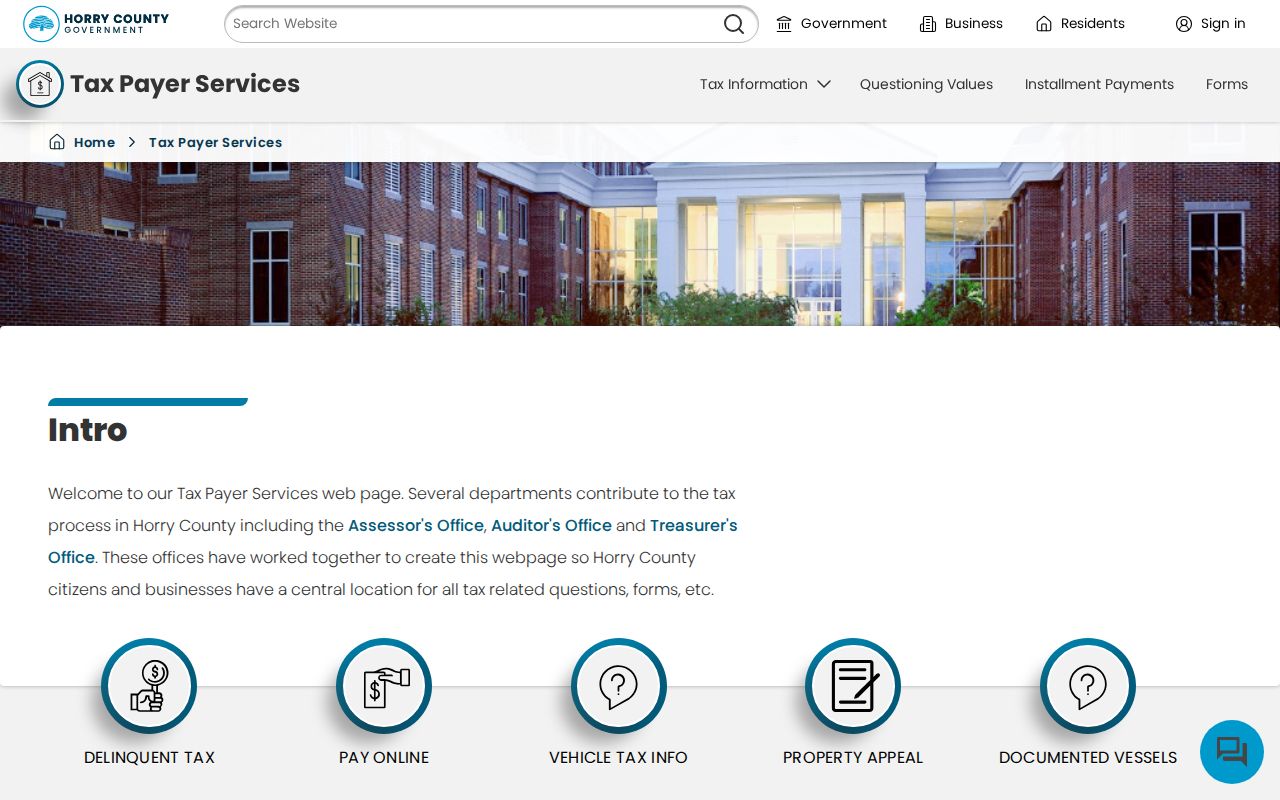
The portal is a useful entry point, then the legal description and recorded documents provide the stronger property trail.
Conway Deed Index Names
The official Horry County Records Search offers party name, book and page, legal description or memo, document type, consideration, and record-date routes. The Register of Deeds copy form says online name results reach 1984 forward and directs name searching in last-name, first-name order without punctuation. An indexed party is a recorded-document lead, not a live resident listing. Compare the legal description, document date, and party role before deciding two results concern the same property or person.
- Index
- A finding tool that points to a record, not necessarily the record image itself.
- Grantor
- The party transferring an interest in a recorded instrument.
- Grantee
- The party receiving that interest.
- Legal description
- The lot, subdivision, or boundary description used to identify land in recorded documents.
The Records Search landing page displays its official-record browse modes.
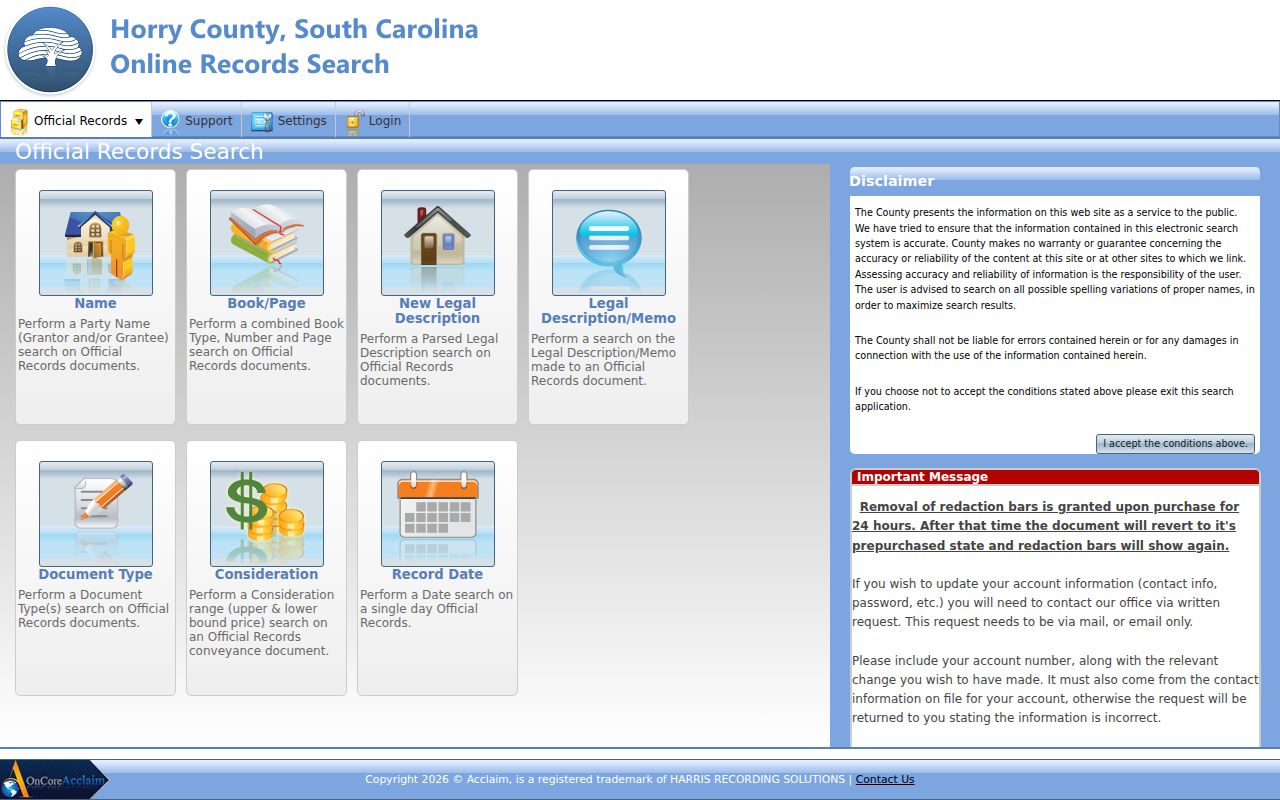
Those modes allow a Conway search to move from a name lead toward a document locator rather than relying on a street label alone.
Conway Resident Directory Sources
No custodian identified a single complete current directory for Conway residents. Instead, the sources below answer narrower questions. A property route can associate a party with a parcel. A deed index records parties to instruments. The voter service is a personal registration check. A court index identifies parties to public cases. Keep the precise limit in view, especially when a result looks persuasive because it has a familiar name or street.
| Conway source | What it can confirm | Custodian | Key limit |
|---|---|---|---|
| Tax and assessment route | Property or taxpayer association | Horry Tax Payer Services | Address access requires a free login |
| Recorded instruments | Grantor, grantee, and property document lead | Register of Deeds | Not an occupancy list |
| Personal voter check | A requesting voter's registration information | State Election Commission | Name, county, and date of birth required |
| Public case index | A party connected to a case | 15th Judicial Circuit | Sealed material is not available |
A name that survives more than one appropriate source is stronger than a lone search hit. Keep the question focused on one person and compare compatible records before reaching a conclusion.
Conway Voter Lookup Limits
MySCVOTES is a personal registration service, not a browseable Conway street roll. State instructions say Check My Voter Registration requires a name, county, and date of birth exactly as shown on the registration card. South Carolina does not register voters by party. An inactive voter is unavailable through the online lookup, and a move to a different county requires re-registration. These limits help prevent a personal check from being stretched into a claim about a whole household or block.
The South Carolina voter information page documents the registration pathway and its prerequisites.

For local election procedures or records questions, Horry County Voter Registration and Elections is the county contact.
The Horry County elections office page provides that local contact information.
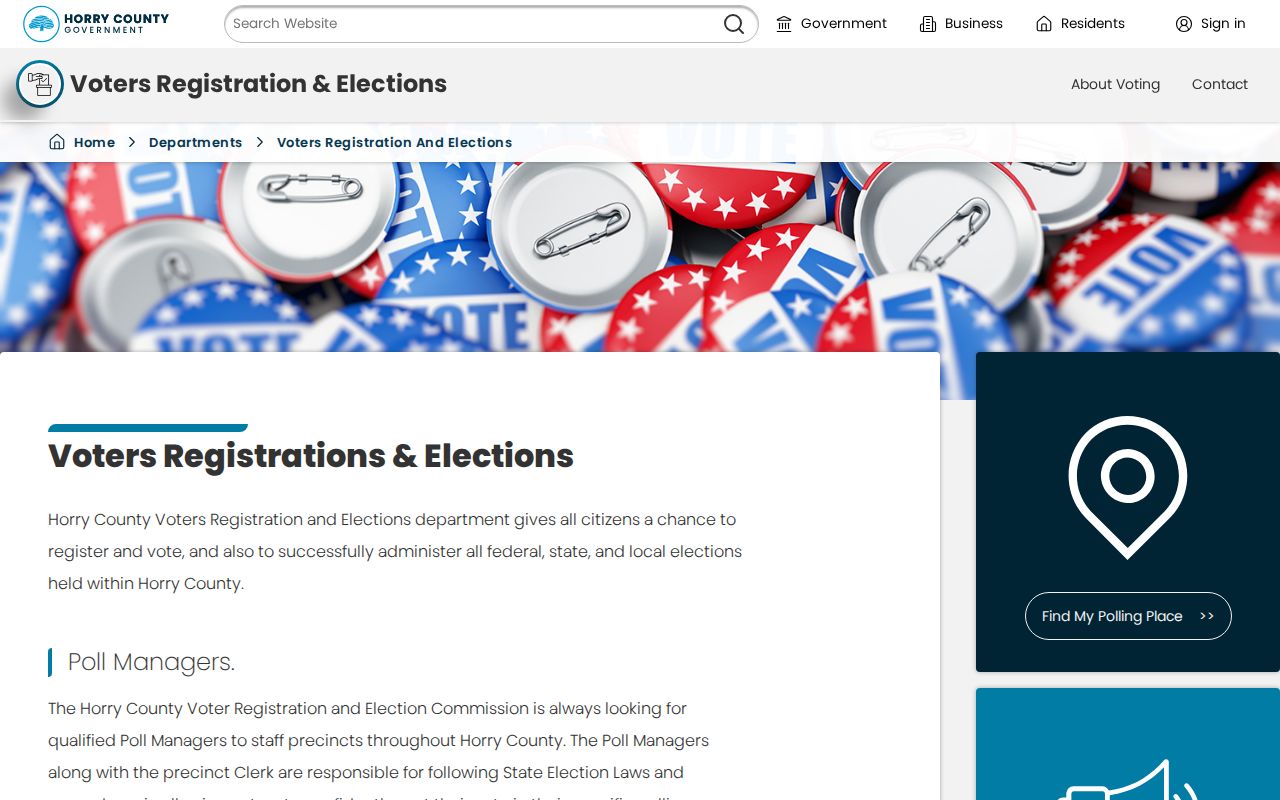
Use the office for election administration questions, not as a way to construct a public list of residents by address.
Conway Court Lookup Checks
The Clerk of Court points Circuit and Family Court users to the Fifteenth Judicial Circuit Public Index. A court result can help separate same-name candidates when its agency, case type, action, disposition, party role, and activity date fit a known fact. It cannot prove someone lives at a current address. Check a case number with the Clerk when a file is needed, and expect sealed or restricted material to remain unavailable.
The Fifteenth Judicial Circuit Public Index is the official Horry destination for that case-search route.
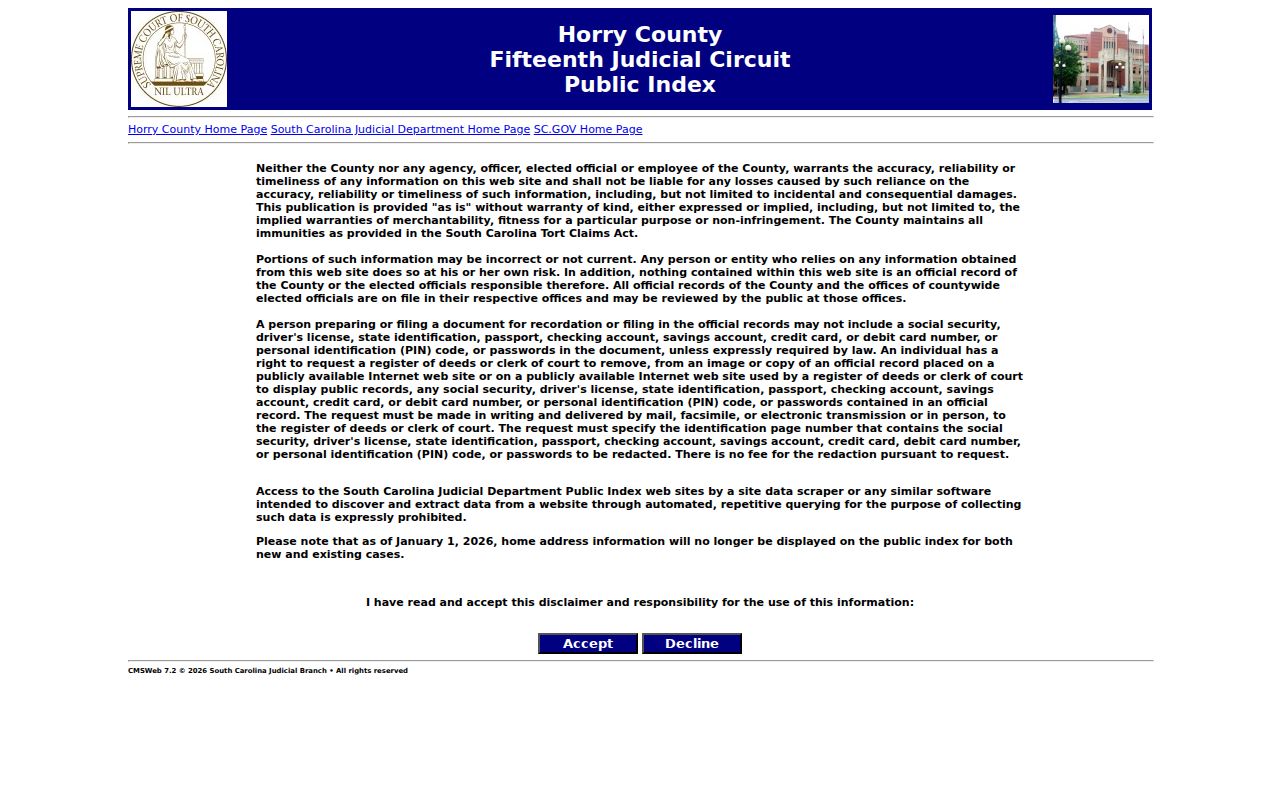
A careful Conway result combines the visible case context with an independent record, rather than treating a party name as an address confirmation.
Conway Family Record Routes
A family-history question often has a dedicated custodian. Horry Probate Court handles estate administration, wills, guardianships, and Horry marriage licenses. The South Carolina Department of Public Health issues statewide vital certifications. Birth certificates are restricted under S.C. Code Ann. § 44-63-80 until they are public after 100 years. Death records become public after 50 years under § 44-63-84. State central filing of marriages began July 1, 1950, and divorce reports begin July 1, 1962. A divorce decree comes through the court route, not the DPH report.
For an estate question, a dated probate file may identify a fiduciary or heir lead, but it still needs case-specific verification. For older Horry work, the FamilySearch catalog identifies probate material for 1803 through 1873, while the South Carolina Archives offers county microfilm and census access.
Conway Historical Resident Directories
The documented Conway directory points are 1939, a cited 1959 through 1971 run, and 1966. They are dated evidence, not a current-resident source. Horry County Memorial Library, the Thompson Heritage and Research Library, the Horry County Historical Society, and Coastal Carolina University's Horry County Archives Center provide the local-history paths worth checking. Ask a librarian or archivist to confirm a volume, publisher, shelf location, and page before relying on a reference.
The Conway city directory material explains how to read those volumes and pair them with other historical records.
The Horry County Memorial Library resource page links its history and archive research options.

Library and archive sources can supply a dated address lead that the modern online deed index cannot reach alone.
Conway Archive Directory Trail
Conway's historical trail changes tools by era. The Library of Congress digitizes a nine-sheet July 1938 Conway Sanborn map, which adds building and street context but no resident names. The map becomes more useful when paired with a directory, census, probate item, or deed legal description. Horry County Historical Society collections include the Independent Republic Quarterly, oral histories, and photographs. The Archives Center preserves Horry and Waccamaw-region materials that can supply context for a documented family or place.
The County announcement for the Thompson Heritage and Research Library records the recent Conway access improvement.
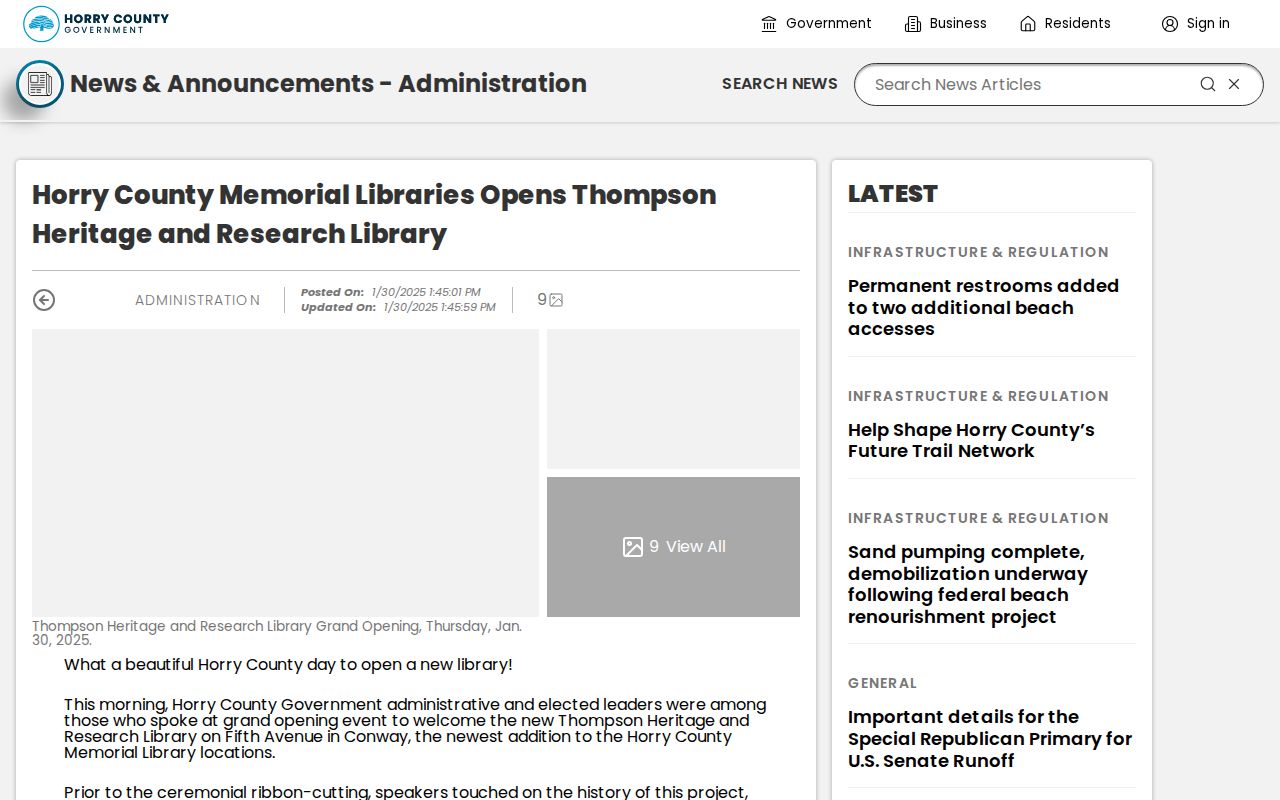
That research location provides a local fallback when an online index does not cover the needed directory year or earlier county volume.
Conway Address Privacy Limits
Public, searchable, and shareable are different things. South Carolina's Address Confidentiality Program, created by S.C. Code Ann. § 16-25-130, gives eligible victims a substitute address that state and local agencies and courts must accept. It does not erase a record already public. The program, inactive voter status, statutory vital-record limits, document redactions, and federal DMV protections are all reasons not to expect a universal address trail.
Lawful use. Conway records can support personal history, estate, property, and safety questions. Do not use them to stalk, harass, intimidate, or harm anyone, and verify a result with its custodian before acting on it.
The Attorney General's Address Confidentiality Program page explains eligibility and the substitute-address process.
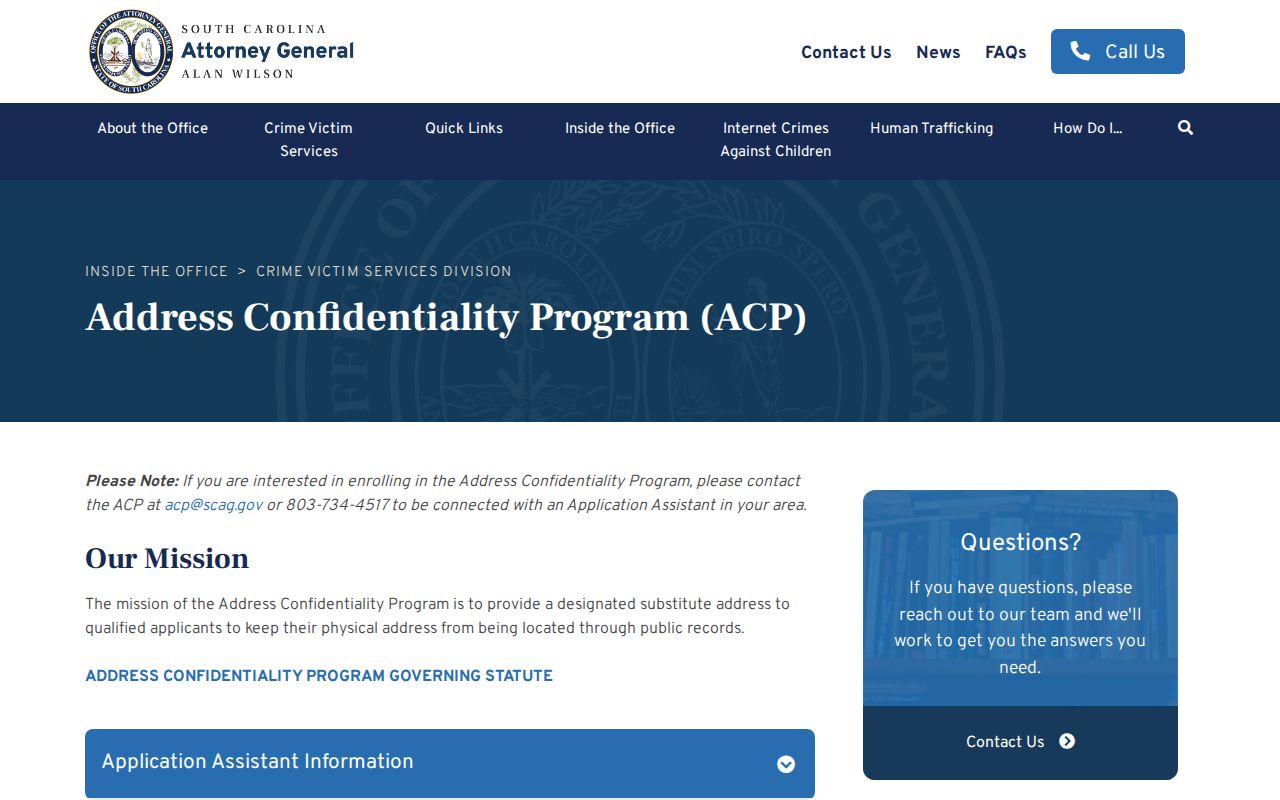
Protected-address programs are an essential limit on any attempt to equate a public record with a complete list of Conway residents.
Conway Recording Safety Alerts
Horry County's free Recording Notification Service is a practical property-record safety tool. It monitors new recordings associated with an enrolled individual or business name. Its matching is character-specific, so “DOE JOHN,” “DOE JOHN JR,” and “DOE JOHN J JR” are distinct entries. An alert is not proof of fraud or a promise that every recording will be caught, but it gives an owner a prompt reason to contact the Register of Deeds about an unexpected instrument.
The Horry Recording Notification Service describes enrollment and the service's property-fraud purpose.
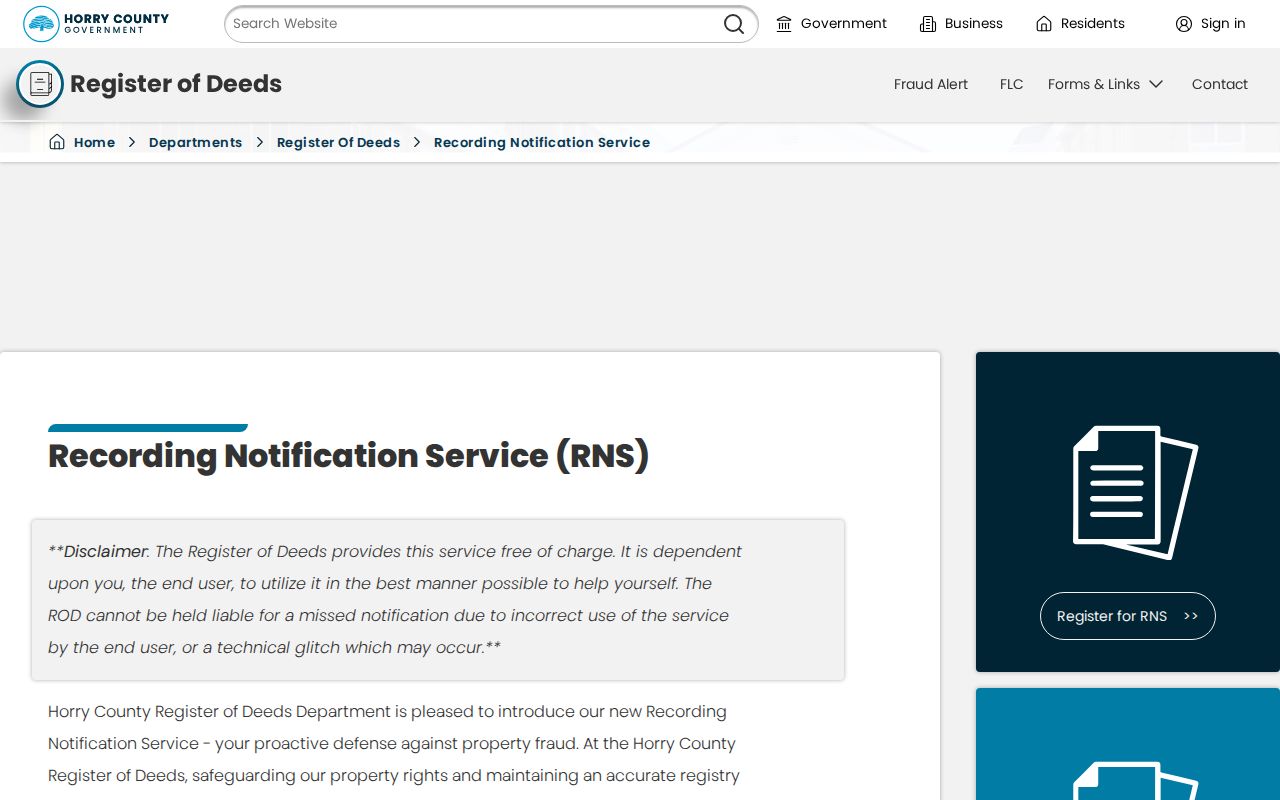
Use the official copy-request form and county staff to verify an unfamiliar recording before drawing a conclusion from an alert.
Conway FOIA Record Requests
South Carolina's Freedom of Information Act, S.C. Code Ann. title 30, chapter 4, gives any person a route to request nonexempt public records under reasonable time and place rules. Section 30-4-30 requires a determination within 10 business days, or 20 business days for records more than 24 months old. The production deadline follows the statutory determination rules. A request works best when it identifies the custodian, record type, subject, date range, and known locator.
Recorded deeds, mortgages, and plats are handled through their ordinary Register of Deeds access route rather than a FOIA request. A narrow request does not overcome sealing, confidentiality, privacy protections, or a missing record.
Note: Keep the request and each response date, then ask the custodian how a vague description can be narrowed before paying for a broad search.
Conway Records Change in 2026
The March 2026 county login requirement is a major local change for people researching a Conway address. It affects online GIS, land-record, and tax or assessor systems that show property addresses, even though the county still identifies the named custodians and counter or request channels. The change also makes careful record notes more valuable. Preserve a PIN, legal description, book and page, document date, or case number while a matching record is visible.
Conway's city and county layers also differ. City GIS carries city addresses, permits, centerlines, current city limits, zoning, and other municipal context. County GIS represents the tax parcel fabric and is not a survey. Pair those systems with a full-address postal check when a Conway mailing label may reach beyond city limits.
Postal labels deserve the same caution. Official county examples place the Conway Library and the Register of Deeds physical office in 29526, the Bucksport Library at a Conway mailing address in 29527, and county-office post-office boxes in 29528. Those examples show overlapping postal uses, not fixed neighborhood lines or proof that every address with a Conway mailing city lies inside the municipality. A full USPS address check answers the postal question. City GIS and the county parcel record answer different jurisdiction and property questions.
Older work changes tools again. The online deed-name statement begins in 1984, while the state archives describe county-record microfilm, census access, wills, and older deed material. The documented Conway directory points and the 1938 Sanborn map are useful dated companions, but neither replaces a parcel legal description or a custodian's record. Preserve a title, year, page, map sheet, or document locator each time the search crosses from a current portal to a historical source.